

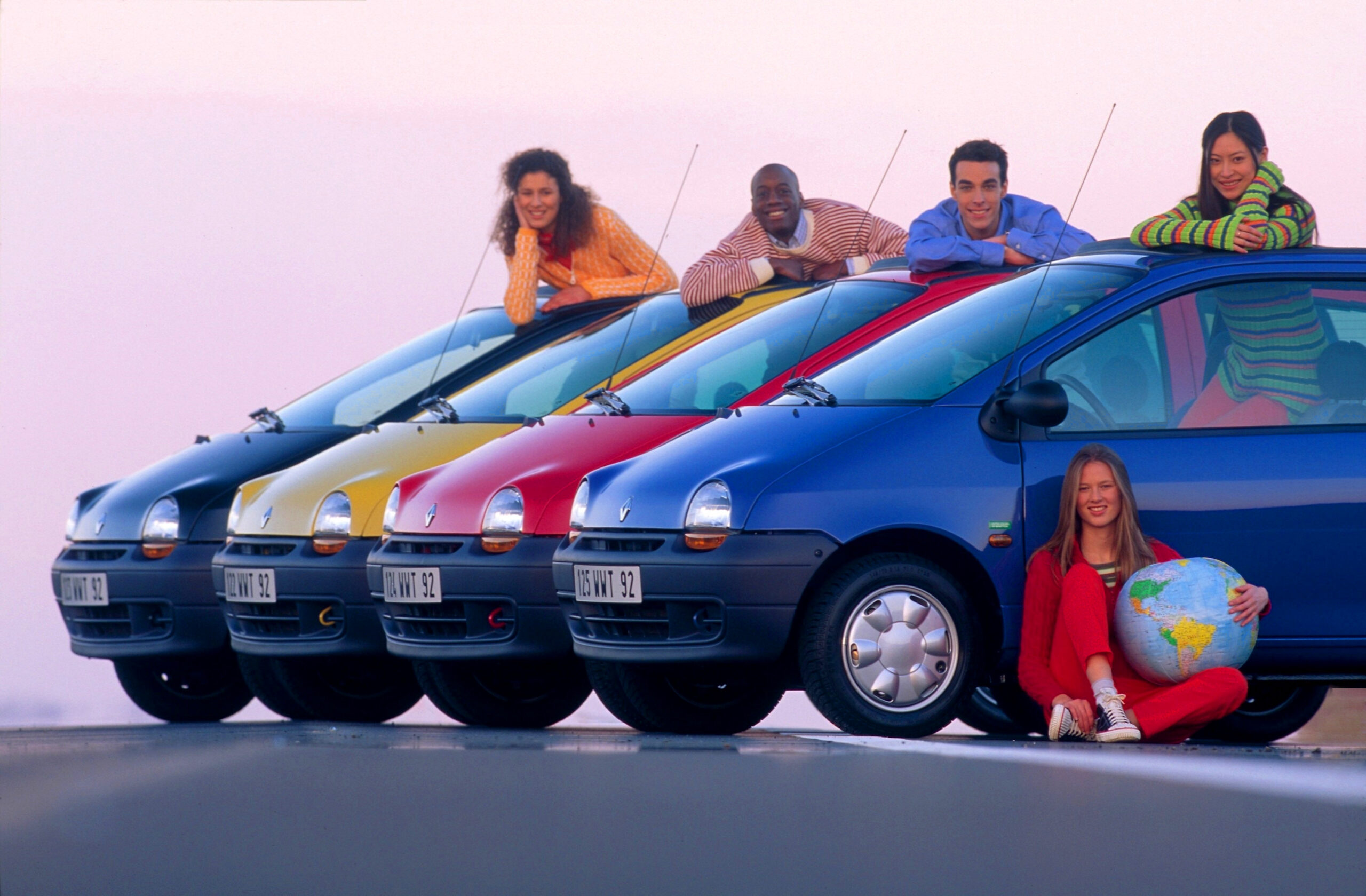
The first-generation Renault Twingo is one of the cleverest small cars of the 1990s. Launched in 1993, it combined a tiny footprint with an improbably spacious interior, distinctive styling and a sense of humour almost entirely absent from modern city cars. Once dismissed as cheap transport, the original Twingo is now increasingly appreciated as a design classic – and good examples are becoming noticeably harder to find.
Originally intended only for the European market, the Twingo arrived as Renault’s replacement for the ageing Renault 4. Designed under Patrick Le Quément, it took inspiration from the simplicity and practicality of the classic people’s car formula, but wrapped it in a rounded, almost cartoon-like body that looked radically different from its contemporaries. Its one-box silhouette, huge glass area and compact dimensions made it instantly recognisable.
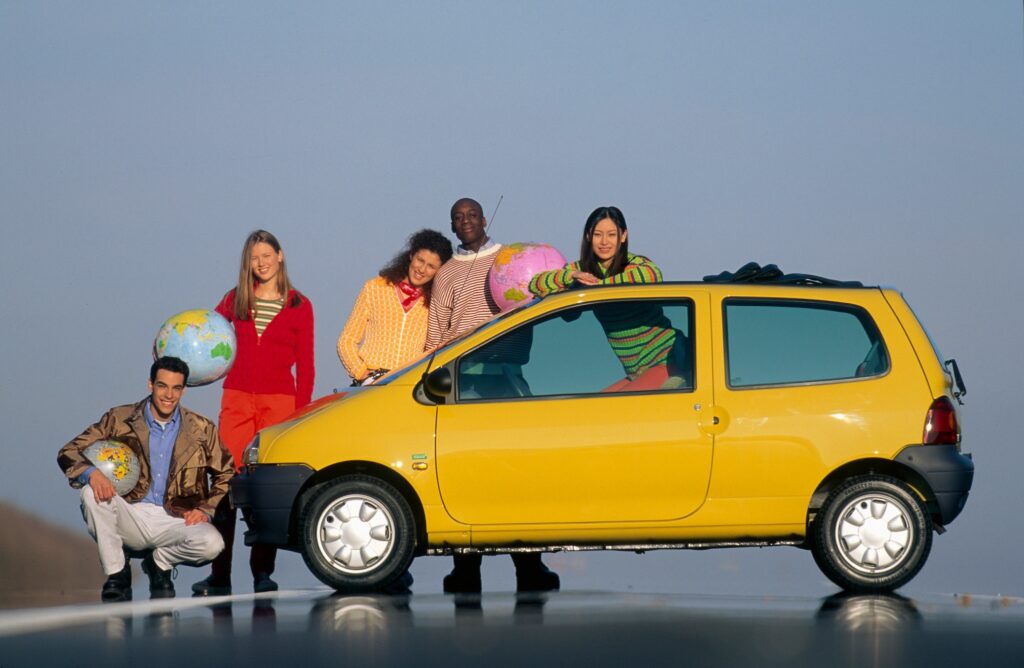
Underneath, the Twingo was mechanically simple. Early cars used Renault’s long-running 1.2-litre ‘Cléon-Fonte’ four-cylinder engine with 54bhp, before later versions adopted more modern D7F and D4F units with outputs rising to around 75bhp in some models. Performance was modest rather than exciting, with even the quicker versions taking around 12 seconds to reach 60mph, but outright pace entirely missed the point of the car.
The real appeal of the Twingo lies in its packaging. Despite measuring only 3433mm long, the cabin feels remarkably spacious thanks to the tall roofline and sliding rear bench seat. Fold the rear seats flat and the little Renault becomes surprisingly practical, while upright seating and excellent visibility make it easy to drive in modern traffic.
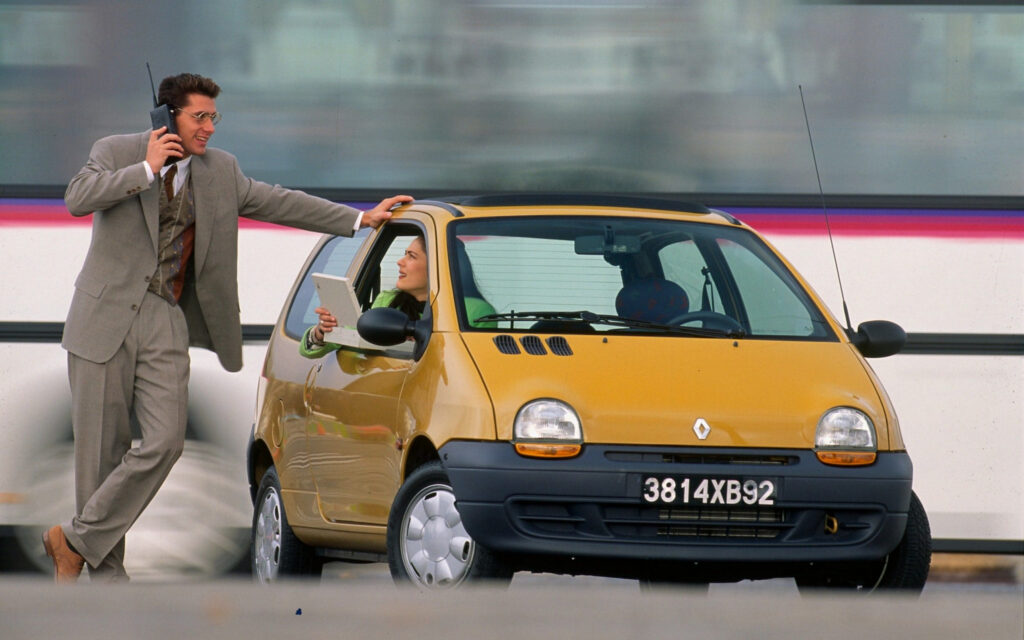
The chassis is similarly straightforward but charming. Soft suspension and narrow tyres mean there is plenty of body roll, yet the Twingo remains light, eager and entertaining at sensible speeds. It feels more agile than many modern superminis simply because it weighs so little. Most versions weigh well under 900kg.
Inside, the Twingo embraces the same playful philosophy. Central digital instruments, colourful trim and unusual fabrics gave it a character lacking in more conventional rivals. Special editions became a major part of the car’s appeal across Europe, with Renault offering countless combinations of colours, decals and interior finishes throughout production.
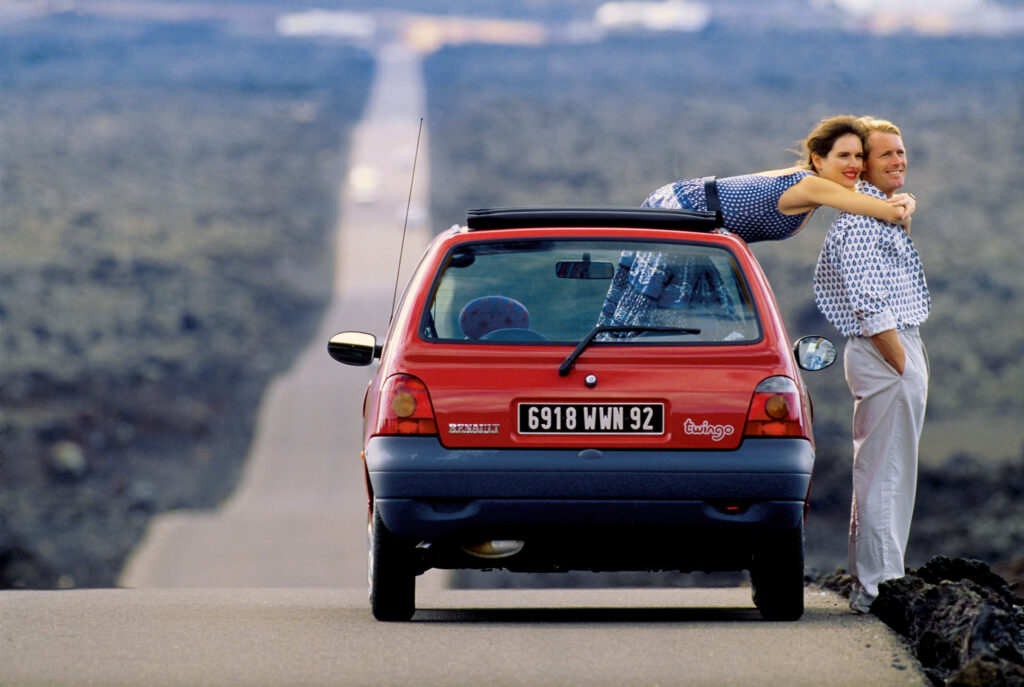
Renault Twingo Mk1 buying info
- Rust is now the biggest issue facing surviving Twingos. Check the sills, wheel arches, floorpans, suspension mounts and rear chassis sections carefully, along with the bottoms of the doors and tailgate. Cars from southern Europe tend to survive better than those from wetter northern climates.
- Mechanically, the Twingo is generally robust and inexpensive to maintain. The early Cléon-Fonte engine is old-fashioned but durable if serviced properly, while later engines are smoother and more economical. Oil leaks, tired cooling systems and neglected cambelt changes are the main concerns. Listen for rattles on start-up and ensure the cooling fan operates correctly.
- Gearboxes are usually dependable, although worn synchromesh can appear on higher-mileage cars. The clutch is light, but replacement is straightforward and relatively cheap.
- Suspension wear is common on neglected cars. Worn bushes, tired dampers and sloppy steering components can make the car feel vague and unstable. A healthy Twingo should feel light and eager rather than loose or crashy.
- Interior condition matters more than expected because many trim parts are now difficult to source. Sun-damaged dashboards, sagging seat fabrics and broken plastic fittings are increasingly common. Originality also matters, as many cheaper cars have been modified or poorly repaired over the years.
- Imports make up a significant portion of the UK market because the Twingo was never officially sold in right-hand drive form in Britain. Most UK cars are left-hand-drive imports from France, Germany or Japan, so check import paperwork carefully and ensure replacement parts correspond to the correct market specification.
Prices and market trends
For years the Mk1 Twingo remained one of Europe’s cheapest modern classics, but values have begun rising steadily as clean, unmodified cars become scarcer. In mainland Europe, usable examples can still be found from around €2000-€4000, but genuinely exceptional low-mileage cars now command far more.

In the UK, imported cars typically start around £3000 for usable examples, while excellent cars generally sit between £6000-£10,000 depending on condition, provenance and specification. Rare early cars, colourful special editions and exceptionally original examples are beginning to attract collector interest.
The Twingo’s appeal increasingly mirrors that of cars like the original Fiat Panda or Citroën 2CV – simple, clever and full of character in a way modern small cars rarely are.
Renault Twingo Mk1 specifications
| Production years | 1993–2007 |
| Engine | 1149cc inline-four petrol |
| Power | 54–75bhp depending on version |
| Torque | 69–84lb ft |
| Transmission | Five-speed manual |
| 0-60mph | Around 12–15 seconds |
| Top speed | Approximately 94–106mph |
| Length | 3433mm |
| Width | 1630mm |
| Height | 1420mm |
| Weight | Approximately 790–950kg |
| Body style | Three-door hatchback |